
2007: Making a Future?
Jeff Roche described his school career and influences leading to a course in Innovative Manufacturing at Loughborough University, Dr Raj Rajagopal, Fellow of the Institution of Engineering and Technology responded.
- http://core-ed.org.uk/tools.html/the-owers-lecture/2007-making-a-future
- 2007: Making a Future?
- 2007-11-08T17:00:00+00:00
- 2026-11-08T20:00:00+00:00
- Jeff Roche described his school career and influences leading to a course in Innovative Manufacturing at Loughborough University, Dr Raj Rajagopal, Fellow of the Institution of Engineering and Technology responded.
08 Nov, 2007 05:00 PM to 08 Nov, 2026 08:00 PM (Europe/London / UTC0)
London

The third Owers Lecture took place in front of an invited audience at Oracle's city office in Moorgate, London.
The 2007 lecture was given by Jeff Roche, a second year undergraduate on the Innovative Manufacturing Degree at Loughborough University. Jeff was a high flyer at King Edward VI Grammar School in Chelmsford, Essex and he will reveal his experiences, challenges and viewpoint on the hurdles and highlights of his journey into the world of engineering and manufacturing. There are lessons for educators, legislators and industry. A compelling tale for those concerned with the future of Britain and the global economy.
After Jeff's account of his experiences, Dr Raj Rajagopal was invited to respond to the insights and challenges raised and to lead a debate for participants.
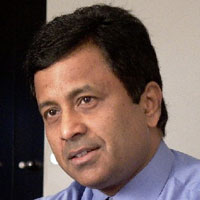
Dr Raj Rajagopal was Chief Executive of BOC Edwards and an Executive Director of the BOC Group plc until November 2006. He has worked for over 25 years in the field of manufacturing technology and product development and held several positions in BOC Edwards before being appointed Chief Executive.
He has led Edwards to world leadership in the high vacuum business, using innovative manufacturing as a competitive advantage in supplying the global semiconductor industry against Japanese, German and French competition. He was appointed non-executive Director of FSI International Inc in Minneapolis (a NASDAQ company) in January 2001 and Foesco plc in May 2005.
Dr Rajagopal is a Fellow of the Royal Academy of Engineering and a member of the Council of Cranfield University. He is a member of the advisory board of the Centre for Business Research, Cambridge University. He is also a Fellow of the Institution of Engineering and Technology (IET – formerly the IEE) which awarded him the IEE Eric Mensforth International Gold Medal for outstanding contribution to manufacturing technology and management. He is also a Trustee of the IET and chairs its Manufacturing Sector Panel. He is a Fellow of the Institution of Mechanical Engineers, and a member of the Chartered Institute of Management. He was awarded an Honorary Doctor of Science degree by Cranfield University in 2004.
Malcolm Moss reported on this event in his blog of 15th November 2007:
"Dr Stan Owers’ research revealed a culture in Britain where we enjoy the benefits of engineering and technology but do not respect the engineers or means of production.
Education and industry could both do better in inspiring students and influencing career aspirations.
At the age of 5 Jeff Roche wanted to be a farmer and a train driver, at 10, a computer programmer and at 16, a PE teacher. But his lifelong love of Lego Technic, Design & Technology lessons taught by inspirational teachers at a prestigious grammar school, stumbling across an unusual course and a supportive grandparent has led to Jeff now being in his second year of the Loughborough University MEng in Innovative Manufacturing and Technology. It was clear that the people Jeff encountered, particularly inspirational teachers and support staff, which were critical to his career choice. But he is still not sure that this will lead to a well paid career.
Jeff told his 'warts and all' story to a packed audience of business people and representatives from education and engineering at the annual Owers Lecture organised by Core Education UK and hosted by Oracle at their London offices on 8th November. As well as highlighting the people and activities that inspired him, Jeff also highlighted the things that did not, including: teaching from the book, too few opportunities at school to relate theory to practice, careers advice and materials that were only of use if you already knew what you wanted to do, uncertain job prospects at the end of his degree course despite the fact that it is sponsored by industry and includes the equivalent of a year in industry.
In responding to Jeff’s story, Dr Raj Rajagopal, fellow and Trustee of the IET, Fellow of the IMechE and member of the Chartered Institute of Management introduced a global context commenting that, “To be an engineer in China and India is something that young people aspire to because these countries recognise the power and wealth that the manufacturing and engineering industries generate.“
He added that while government and the city must support and invest in manufacturing and engineering in the UK, industry and education had major roles to play. He went on to point out that there are many manufacturing millionaires in the UK including James Dyson. He also welcomed the introduction of the engineering diploma but questioned the form of its implementation.
The debate that followed raised a number of issues including the prescriptive nature of the national curriculum, demotivating assessment and an approach which was abstract and text based rather than practical and in context. There was a call for a ‘project based’ learning which is more cross-curricular. Design technology as a subject, it was argued, had the more potential than any other subject to provide that basis. Others noted that there is an emphasis on recruitment to science and maths courses but less recognition for design and technology in schools – the subject which inspired Jeff.
Jeff’s experiences triggered a call for students and teachers to be more aware of their local industry to finally dispel the myth of grease and dirt. It was pointed out that there are 20,000 manufacturing companies in London and that majority are SMEs many of which are highly innovative. Schools should recognise the trend from large plants to smaller, specialist, manufacturing units.
This report uses material from the Make Your Mark press release provided by Mindy Wilson and my own notes. We at Core UK are are grateful for the support of Chris Binns of Oracle, IET and Mindy Wilson of MakeYour Mark. Make Your Mark is the national campaign to create an enterprise culture in the UK. It aims to inspire young people in their teens and twenties to have ideas and make them happen. The not-for-profit campaign is backed by an unprecedented coalition of businesses, charities, education bodies and government."
View some video clips of the speakers.